What is a Split Contract?
In the Web3 arena, non-fungible tokens have carved a niche for themselves. From Beeple Art to CrytoKitties and Bored Apes Yacht Club (BAYC), all gained so much attention worldwide that the idea of rising to fame and earning huge money turned into a frenzy. NFT collection projects are usually the outcomes of many parties/individuals’ collaboration. That said, when it comes to sharing revenues, everyone wants integrity and transparency.
Enter split contract. In this article, we introduce you to the concept of split contracts, how they work, features of split contracts, and more. Let’s get started.
Contents
What is a Split Contract?
With NFTs, digital artists and creators not only nurture their art but hold the advantage of making a good passive income and monetizing their artwork in the long term. In addition to the money earned from buying and selling NFTs, artists also enjoy the benefit of NFT royalties. It’s such a huge advantage to the creators that each time their digital asset undergoes a resale, they make a certain amount as royalty. Such gestures in the Web3 economy encourage more artists to come forward as everyone feels they have a secure future.
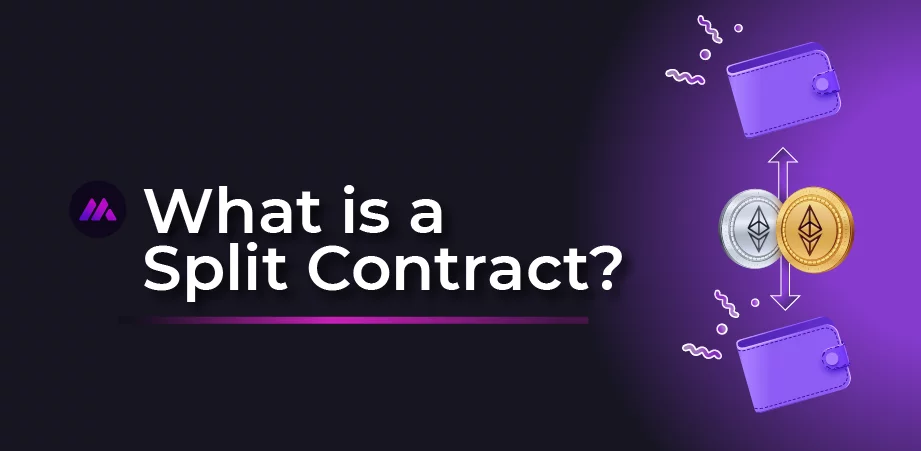
That said, multiple stakeholders are involved in an NFT collection project. Some include project developers, content creators, artists, and other members. Each of them works towards making a certain income by sharing the profits earned from selling the NFT collection. Revenues from the trading of NFT collections are shared between these stakeholders by deploying an executable program on the blockchain network. This is called a split contract. As the name suggests, the objective of the split contracts is to split or distribute the revenue among the stakeholders based on a pre-agreed set of conditions.
How does a split contract work?
Split contracts are a special type of smart contract that are used to split revenues among individuals who have a stake in an NFT or other project. For example, suppose the creator should receive 30%, project developers 30%, and marketing team 40%, these conditions, once agreed upon among the parties or stakeholders, are hard-coded in the smart contract along with their wallet addresses and published on the blockchain.
Revenues from the sale of NFT collections or royalties are sent to the split contract. It then sends them to the wallet addresses of the respective recipients entitled to the amounts predefined in its code. Ethereum-based split contracts use software programming languages like Solidity to code and execute the conditions.
Features of split contracts
Hard-coded
One of the key features of split contracts is the share or proportion of the revenue that the stakeholder will receive and their wallet addresses. Once predefined in the contract, it can’t be changed later at any stage. So, these proportions and wallet addresses that define the percentage to be sent and the respective stakeholder’s address are immutable and cannot be modified or tampered with. This ensures that the parties in the NFT projects have to adhere to the revenue-sharing percentages they had initially announced and agreed upon.
Transparent
Another key feature of split contracts is the high degree of transparency they demonstrate. As the split contract is deployed on a blockchain, the allocation and distribution of the revenues or royalties from the NFT collection projects are visible and viewable by anyone in the network. That said, it eliminates any room for skimming off any amount or underpayment or overpayment to any stakeholders, thus ensuring transparency in transactions.
Verifiable
As the split contracts are published on the blockchain, anyone can view the details of the funds’ distribution and sharing. Stakeholders can easily verify that everyone in the project is rewarded only as much was agreed upon initially and that there aren’t any fraudsters.
Why should you choose us?
At iMintify, we aim to make your NFT-related operations hassle-free and a rewarding experience. You can create a smart contract using our platform. Additionally, it lets you fill in the addresses of multiple stakeholders while creating the contract itself. This saves you valuable time and effort, ensuring that your NFT revenue-distribution strategy is in place.
Wrapping Up
Split contracts offer an extremely convenient yet transparent means to divide the revenues from NFT projects among the stakeholders. With their hard-coded feature, they guarantee integrity, making the process highly secure. Interested in knowing more about split contracts? Feel free to reach out here.
Legt de basis uit: wat dingen zijn, hoe ze werken en waarom ze bestaan, zonder jargon.
Related articles

ERC-721 vs ERC-1155: Which NFT Standard Should You Use?
ERC-721 and ERC-1155 solve different problems. Here's the practical difference between the two standards, what it costs in gas, and which one fits a PFP collection versus a game or edition drop.

What Is a Liquidity Pool? Crypto Liquidity Explained
What is liquidity in crypto and what is a liquidity pool? How pools and AMMs work, why liquidity matters for your token, when to add it, and impermanent loss explained.

Are NFTs Dead in 2026? An Honest Look at Where They Stand
Are NFTs dead? The hype cooled, but NFTs are still widely used for memberships, gaming, tickets and loyalty. An honest look at what changed and where NFTs stand now.

How Do NFTs Work? Blockchain, Minting and Ownership Explained
How do NFTs work? An NFT is a unique token on a blockchain that points to your artwork and proves who owns it. Learn about minting, metadata, storage and smart contracts.

What Does NFT Mean? (NFT Stands for Non-Fungible Token)
What does NFT mean and what does NFT stand for? NFT stands for non-fungible token, a unique digital item you own on the blockchain. Here is what that means, in plain English.

Arweave vs IPFS for NFTs: Which Storage Is Truly Permanent?
IPFS keeps NFT files online while pinned; Arweave stores them permanently for a one-time fee. Here is the full comparison, and why iMintify offers both.

How to Set Up NFT Token Gating for a Discord Community
Gate a Discord channel to actual NFT holders in a few steps: connect a verification bot, set the contract address, and assign roles automatically as wallets verify.

How to Renounce Contract Ownership After Deploying an NFT or Token
Renouncing ownership is one of the clearest trust signals a token or NFT contract can send. Here's what it actually does on-chain, when to hold off, and how to do it through iMintify's post-deploy tools.