
What are NFT Royalties and How Do They Help Creators?
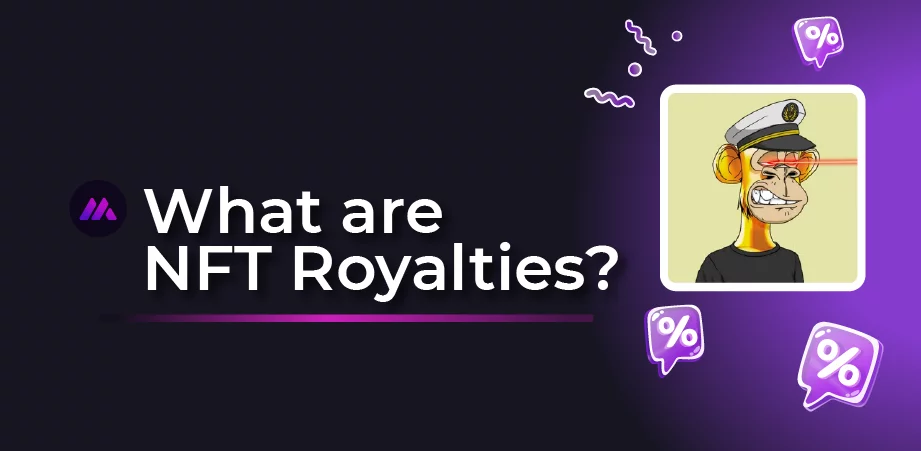
The NFT revolution, in many ways, paved the way for a new generation of artists and creators. Using digital assets stored on the public distributed ledger to gain ownership and expression of art resulted in a revolution. With the immense popularity and huge money that the creators of Beeple Art and Bored Apes Yacht Club (BAYC) gained, the concept of NFTs garnered significant attention, making minting NFTs seem like a chore.
In effect, another term came up, which is no longer a neologism in the NFT world: NFT Royalties. These payments aim to boost the creator economy by letting digital artists earn a long-term passive income while granting them creative freedom. Read on to learn about NFT royalties, how they work, points for creators to remember while considering royalty, the role of marketplaces, and more.
Contents
What are NFT royalties?
Similar to the artists in the music industry, NFT creators are also entitled to royalties on the resales of their artwork. NFT royalties offer a great way for digital creators to monetize their work and earn a good passive income. However, there are some differences. In the case of the usual royalties, the amount or percentage the creator or musician receives is based on the licensing agreement between the artist and the other party.
On the flip side, in NFT royalties, the digital artists can fix a certain percentage during the minting process as their royalty, say 5% or 10%. Each time their NFT is resold, they receive the fixed amount as royalty. An amazing example of NFT royalty is Beeple Art, which was resold in the Ethereum Nifty Gateway marketplace at €6.6 million — 100 times more than the original sale price.
How do NFT royalties work?
Most NFT marketplaces allow creators to set their royalty percentage. This amount is sent to the creator on each resale of their NFT, which is executed using smart contracts. In a true sense, royalties are not inherent costs but rather an additional fee charged by the marketplaces themselves for using their platforms. In yet other cases, this extra amount charged may be equal to the transaction fee on the marketplace. Royalties are calculated at the time of the NFT sale and sent to the wallet address associated with the ID tag to the specific NFT collection.
A key question in creators’ minds will be: When does the NFT royalty start? Well, the simple answer is NFT royalties are initiated by the blockchain only when the original sale has taken place and a resale of the art or collectible occurs.
What are the points for creators to keep in mind concerning royalties?
Some of the essential facts to take into account are:
Always set a standard royalty rate
Royalties are an added expense for the owner at the moment as they mostly mint NFTs with the idea of trading them later. Higher royalty rates may prevent collectors from buying them.
Understand the permanent feature of royalties
The NFT royalty rate, once set by the user, can’t be changed. This means you can’t alter the percentage or the recipient’s wallet address. Additionally, it’s not possible to remove the royalty either.
Royalty rates are usually between 5% and 10%
As a standard practice, most NFTs have royalty rates of 5-10%. Other factors to consider while determining the royalty rate are – project size, target audience, level of interest and willingness to buy the asset, and size of the collection (larger collections usually have lower royalty rates).
How do marketplaces play a role in NFT royalties?
NFT marketplaces offer creators the platform to sell or trade their masterpieces. They are a vital player in the Web3 ecosystem as they pave the way for the creator or ownership economy. Each blockchain network has its marketplaces and other cross-chain marketplaces as well. Marketplaces let creators enjoy a passive income by setting the NFT royalty rates while imparting credibility to the projects listed by them. Nevertheless, some marketplaces like Opensea have tried removing the rates set by creators and offering options for buyers on whether they wish to pay the royalty amount.
Such practices will hamper the growth of the creator economy, discouraging new artists from entering. Budding digital creators will face challenges as they can’t compete against established artists, and this will stifle innovation. Besides, it is not welcomed as it impacts the long-term passive income that the creators are entitled to. Thus, marketplaces hold the “power” to open or close the gateway to the creator economy.
Wrapping Up
NFT royalties are here to stay. Despite the ebbs and flows in 2022, they provide hope for the Web3 creator economy to earn a sustainable income. Apart from the creators, NFT royalties offer businesses the opportunity to win customer loyalty by incentivizing the buying and selling of products and sharing revenues with customers, thereby crafting a remarkable customer experience. Companies that adopt the NFT royalties will certainly stay competitive in the coming years.
Interested in knowing more about this? Feel free to reach out to us here.
Read next
Legt de basis uit: wat dingen zijn, hoe ze werken en waarom ze bestaan, zonder jargon.
Related articles
ERC-721 vs ERC-1155: Which NFT Standard Should You Use?
ERC-721 and ERC-1155 solve different problems. Here's the practical difference between the two standards, what it costs in gas, and which one fits a PFP collection versus a game or edition drop.
What Is a Liquidity Pool? Crypto Liquidity Explained
What is liquidity in crypto and what is a liquidity pool? How pools and AMMs work, why liquidity matters for your token, when to add it, and impermanent loss explained.
Are NFTs Dead in 2026? An Honest Look at Where They Stand
Are NFTs dead? The hype cooled, but NFTs are still widely used for memberships, gaming, tickets and loyalty. An honest look at what changed and where NFTs stand now.

How Do NFTs Work? Blockchain, Minting and Ownership Explained
How do NFTs work? An NFT is a unique token on a blockchain that points to your artwork and proves who owns it. Learn about minting, metadata, storage and smart contracts.
What Does NFT Mean? (NFT Stands for Non-Fungible Token)
What does NFT mean and what does NFT stand for? NFT stands for non-fungible token, a unique digital item you own on the blockchain. Here is what that means, in plain English.

Arweave vs IPFS for NFTs: Which Storage Is Truly Permanent?
IPFS keeps NFT files online while pinned; Arweave stores them permanently for a one-time fee. Here is the full comparison, and why iMintify offers both.

How to use the AI NFT Generator
Turn a written idea into finished NFT artwork, from a single piece to a full collection with matching traits. No design software, no drawing skills.
iMintify in 2026: New Site, Upgraded App, Still Free
iMintify has a new website, revised blogs and fresh 2026 guides, and an upgraded app that is free under fair use. A community project with free credits to start. Long live NFTs.