What is an NFT domain
NFTs seem to be everywhere. The idea of converting digital objects into assets on a blockchain has made NFTs ubiquitous!
What is an NFT domain? We are gradually transitioning towards Web 3.0, and so are the technology trends. Web 3.0 is the age of the NFTs. So, what are their addresses, or where do they reside on the Internet?
In other words, what are the domains of NFTs? An NFT domain is a unique domain represented by a single NFT, wherein the crypto address is used as the website address. Soon, the Web 2.0 domains .com and .org will all be gone, and Web 3.0 NFT domains- .crypto, .zil, .nft, and more- will enter.
Contents
What are domains?
Domains are essentially the addresses to where websites reside on the network. There are thousands of computers on the internet. Each computer is referenced by a unique address, which is the domain. It is similar to the apartment and street names you mention in your residential address.
Instead of remembering a long array of numbers and alphabets or your computer’s IP address, domain names offer a simpler way to access the websites. Domain Naming Service (DNS) makes the internet a convenient way to interact.
Domain names usually have two parts – a website name and an extension. For example, Amazon has the domain name amazon.com, wherein amazon is the website name, and .com is the extension. When you buy a domain name, you specify which server your domain points to.
Domain name registrations are handled by a central organization known as the Internet Corporation for Assigned Names and Numbers (ICANN). The entity maintains a centralized database of all existing domain names and where the domain name points.
What are Registrar Domains?
Registrar domains are businesses that handle the reservation of domain names and enable the assignment of IP addresses for those domain names. All domain name registrars are accredited to ICANN (Internet Corporation for Assigned Names and Numbers), a non-profit organization managing domain names globally. Examples of registrars are – GoDaddy, Hover, Bluehost, Dreamhost, NameCheap, etc. The domain registry manages the domain names.
So, how is a domain registrar different from a domain registry?
To understand better, we must look into the various entities in this operation. There are registries, registrants, registry operators, registrars, and the ICANN. Registries are organizations responsible for managing the top-level domains such as .com and .net. They maintain a complete database of which organizations and individuals use these domains.
Registrants are individuals who register a domain name. Registry operators maintain records of registrants. Registrars such as GoDaddy are delegated the task of selling domain name registrations by registries.
In essence, registries only maintain and manage domain names, while registrars only facilitate the task of registries by selling those domain names.
What are Blockchain domains?
Blockchain domains literally mean domains residing on the blockchain. These domains are open and secure due to the decentralized nature of blockchain.
Unlike traditional domains, these domains are hosted on the top of a blockchain platform. This means they are not on a centralized system. Instead, they are spread across multiple computers or nodes of the blockchain network.
The ideology behind crypto domains is to enable decentralization, paving the way for expanding Web 3.0 internet.
The history of these domains dates back to the early cryptocurrency periods when Namecoin existed. This crypto was launched so that users could register their own domain names on the Bitcoin network. However, blockchain technology was limited then, so little could be achieved.
With the advent of Ethereum, the concept of smart contracts emerged. This offered a gateway to tap the potential of these domains.
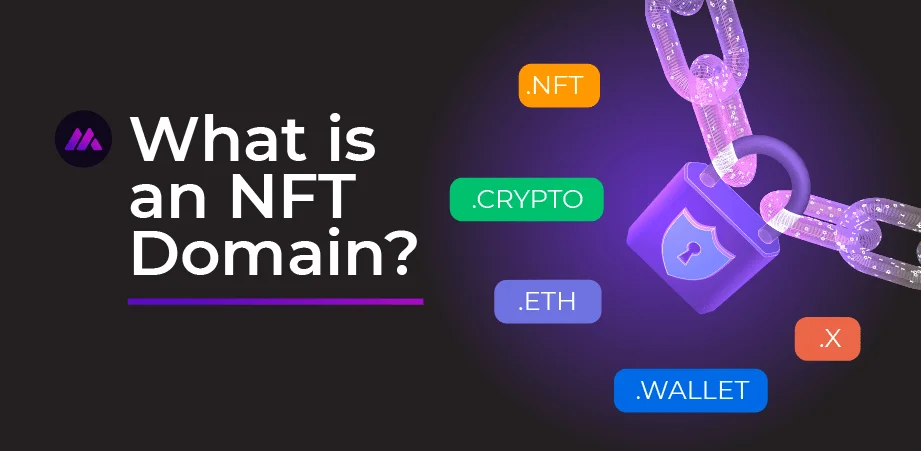
Register your NFT Domain
Populair NFT / Crypto Web3 domains:
- .NFT
- .CRYPTO
- .ETH
- .WALLET
- .X
Populair NFT / Crypto Web2 domains:
- .IO
- .COM
- .XYZ
- .NL
How do blockchain domains work?
As mentioned, these domains do not reside on a central server. Instead, they are located on a public registry and accessible to the public.
This offers greater transparency, as anyone can view the records. Besides, users enjoy a higher level of security, as each user holds permission to update their domain names. This reduces the anxiety related to domain names getting stolen.
There are certain aspects to consider while considering the NFT domains.
Let’s take a step back like DNS (Domain Naming System) in Web 2.0, which focuses on providing a simpler method to remember IP addresses; web 3.0’s NFT domains could offer a similar service to avoid remembering complicated crypto wallet addresses. Suppose you use the Solana Naming System, SNS, then it could replace the crypto wallet address with .sns, for instance.
If you connect the SNS domain name to a website and navigate to nftqapital,sns, it may display a functional website of iMintify as in Web 2.0. Besides, just as you can send €30 to a crypto wallet address, it should be possible to send it to nftqapital.sns.
An example of a crypto domain provider is Unstoppable Domains. It offers several benefits –
- It hosts the domain by acting as a hosting service.
- It offers multiple wallet addresses – nftqapital.crypto could link to Ethereum, Solana, or Polygon.
- It’s a one-time fee, not an annual payment once you buy, you own the domain, unlike Web 2.0 domains, which you only lease.
However, there are some limitations. For example, Web2.0 browsers like Google Chrome will not support .crypto or .nft domains. So, first, a new browser is needed. Likewise, there are other aspects to ponder before embarking on NFT domains.
What are the Advantages of Crypto Domains?
These domains are a crucial innovation towards decentralization and granting powers to users. The significant benefits that can be reaped include–
- Decentralization: The greatest advantage offered by these domains is their decentralized nature. This provides excess power to the users and enhanced accessibility.
- Ownership Privileges: Users can update their domain names in the public registry with these domains. However, in traditional domains, there are a lot of restrictions, and it does not provide ownership to the users in a true sense.
- No annual fees: In the case of traditional domains, users must pay a yearly fee to keep their domains active. However, there is no hassle of annual domain fees in the case of blockchains. It has a one-time purchase option; once you have a domain, it’s yours forever. Your domain is registered to a crypto wallet address, and you can leisurely use it!
- Censorship-resistant: The most striking advantage of these domains is that no central authorities or the government can censor your domains. While many websites and domains are blocked by these authorities, with these domains, you can rest assured that no one will flag your domain.
- Easier Crypto transactions: These domains make crypto transactions smoother. How? You tag your crypto wallet address to these domains. Your friends or anyone intending to transfer you money need not copy-paste the lengthy and complex crypto wallet addresses. They can use simple domain names and make the transfer easy!
What are the Disadvantages of Blockchain Domains?
Though these domains offer a bouquet of benefits, they also have some limitations.
- Losing Private Key: The primary drawback with these domains is the risk of you losing your private keys. If you ever lose your private key, it means you lose your domain name altogether. Though it offers the advantage of decentralization, in situations like this, you only have to discard your domain, as no one apart from you knows the private key combination.
- Limited SEO visibility: Unlike traditional domains using .com or .org, these domains with .crypto extensions have limited SEO options. They are nascent, which means users cannot easily access .crypto on Google or other search engines.
- Threat of Spammers: These domains are decentralized, which poses a greater risk of spammers. Your website may be spammed with irrelevant or inappropriate content posted by an anonymous entity.
You could check out Unstoppable Domains for more on Crypto domains. First, however, make sure you understand the points we mentioned here!
Legt de basis uit: wat dingen zijn, hoe ze werken en waarom ze bestaan, zonder jargon.
Related articles

1/1 NFT vs Generative Collection: Which Should You Launch First?
A single hand-crafted 1/1 and a large generative collection solve completely different problems. Here's a clear way to decide which one actually fits where you are as a creator right now.

ERC-721 vs ERC-1155: Which NFT Standard Should You Use?
ERC-721 and ERC-1155 solve different problems. Here's the practical difference between the two standards, what it costs in gas, and which one fits a PFP collection versus a game or edition drop.

What Is a Liquidity Pool? Crypto Liquidity Explained
What is liquidity in crypto and what is a liquidity pool? How pools and AMMs work, why liquidity matters for your token, when to add it, and impermanent loss explained.

Are NFTs Dead in 2026? An Honest Look at Where They Stand
Are NFTs dead? The hype cooled, but NFTs are still widely used for memberships, gaming, tickets and loyalty. An honest look at what changed and where NFTs stand now.

How Do NFTs Work? Blockchain, Minting and Ownership Explained
How do NFTs work? An NFT is a unique token on a blockchain that points to your artwork and proves who owns it. Learn about minting, metadata, storage and smart contracts.

What Does NFT Mean? (NFT Stands for Non-Fungible Token)
What does NFT mean and what does NFT stand for? NFT stands for non-fungible token, a unique digital item you own on the blockchain. Here is what that means, in plain English.

Arweave vs IPFS for NFTs: Which Storage Is Truly Permanent?
IPFS keeps NFT files online while pinned; Arweave stores them permanently for a one-time fee. Here is the full comparison, and why iMintify offers both.

How to Run a Whitelist Presale Without Getting Sniped by Bots
Bots don't care about your allowlist, they care about being first. Here's how per-wallet limits, signature-based allowlist checks, and staggered timing keep a presale from getting swept before real holders get a chance.