Wat is NFT Art?
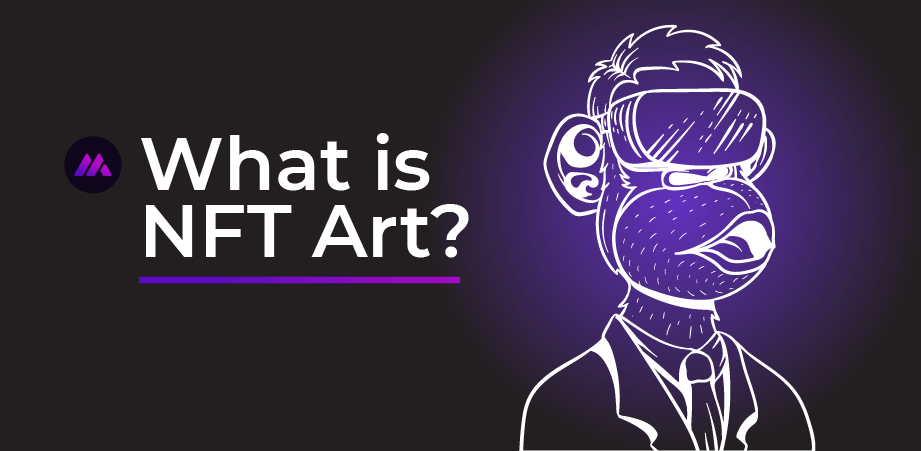
NFTs have found themselves applied to various themes, including music, sports, gaming, collectibles, and more. Of these, NFT art has gained tremendous popularity and success.
From CryptoPunks to Beeple Art and CryptoKitties, all belong to the niche category – NFT Art. These art creations helped their creators monetize their work and became famous overnight.
This garnered the attention of artists worldwide, and soon, there was a frenzy, triggering every creator to build NFTs.
Art holds the immense potential to revolutionize the entire creative industry.
What is NFT art?
The form of art opens the gateway to a newer world for artists and creators. People globally are captivated by this technique, and most are jumping into NFTs. It’s an entirely new realm of artwork, which helps creators monetize their work.
NFTs offer artists ways to rent their digital masterpieces, sell them, or display them any way they like. Besides providing the artists a reasonable way to generate an income, NFTs also enable them to retain their ownership title.
NFTs are digital assets stored on a blockchain. They are digital files – audio, video, images, etc. that are converted to a unique digital object through minting and stored on the blockchain platform. Without minting, NFT art cannot exist.
How to create NFT art?
You can create NFT art conveniently without much technical background. This is because NFTs are created based on the generative art technique, which delves into algorithmic approaches to create the art.
Some tools use AI to help you create beautiful and exciting designs. You can set the AI algorithm’s parameters with a few clicks. As a result, it’s very user-friendly to create NFT art.
The process of creating NFT art involves a few steps.
First, you need to create an image. This is the main part that can make or break everything. If you are yourself an artist, then it’s all yours! Otherwise, you may seek the assistance of a traditional illustrator or even a digital artist who can create an image for you.
The second step usually requires the help of a digital artist. According to the current trend, the generative NFT art is kept at 600×600 pixels. Therefore, it is recommended to use tools like Photoshop or GIMP to create layers.
What is layering in generative NFT art?
Most generative art involves creating attributes or traits and randomly layering them to produce unique art.
Layers refer to the various levels or sections you make on the image to work your way to the final art form. Start with the base character image. Place it at the bottom layer. Say your image is a face with headwear, eyewear, neckwear, and more. Then, above the base layer, add other layers for each attribute, such as headwear, eyewear, neckwear, clothing, etc.
In the third step, you must ensure that each layer is at the correct level, as per the image created in the first step, to avoid problems later. For example, eyewear should not be inappropriately placed below the lip wear, and any neckwear should be properly centered. If you find any defects in the layering, it is advisable to set it right at this step through adjustments.
An example of layers (left side) along with variations (right side) could be something like this —
- Background – color, wallpaper
- Base character
- Skin – color, texture
- Eyes – color, shape
- Neckwear – color, shape, pattern
And so on. Once you have the base character and all other attributes and variations set, you are done with the creative side. You may then share your Photoshop file with a generative programmer.
What are the final steps in NFT art generation?
With layering properly completed, you are done with most of the artwork. In the next step, the programmer checks if all art layers are stable and there’s no conflict between them. Then, if required, the programmer makes minor adjustments.
The file includes the base character, all attributes and layers, and different variations like color, shapes, texture, etc. It is converted into a transparent .png file in the correct folder location.
Finally, the generative programming compiler works on all attributes, layers, and variations to create the NFT.
As the last step, several checks and test runs are performed before the final image is rendered.
How to draw NFT art?
Having understood the concept of layering, you have mastered more than fifty percent of the generative art. Now, roll up your sleeves to draw NFT art.
There are various tools to help you with this. Some of them are Procreate, Adobe Photoshop, Adobe Illustrator, PixelChain, and more. Let’s take the example of Procreate. You can navigate to the core interface of the app and open a new file. Once done, you would be asked to select a file size and enter a few attributes. The key parameters are the file size and its resolution.
For digital art, keeping a lower resolution also works. So far, so good. Next, you must look for the layers panel on the application. Most apps use a stacked square icon to indicate layering. On the layers panel, you would usually find the choices for creating effects and making adjustments in your art. This place in the app enables you to draw NFT art.
You can visualize the case of a profile picture project. Profile pictures are usually in boxes or squares of random sizes. A suggestion would be to encircle the image or characters in the box so that the composition mostly works despite the box shape. Having a clear idea of the overall composition with any other specific details helps to figure out how to draw NFT art. The vividity and the minute details attract the attention of prospective buyers.
To begin with, you should first identify the elements to be layered. For example, say you have a picture with a man holding a gun in one hand, a sword in the other, a dog sitting at his feet, and a tree behind him. So, you must create layers for all those elements – man, sword, gun, dog, and tree. This means these are the basic levels of layers for your artwork, and you need to create at least one layer for each of these elements.
Instead of a human on the image, say if you have an animal, you might have to consider its side-facing. Accordingly, you need to adjust the settings on the tool.
Next, consider what variations you need to bring in – color, texture, patterns, or what else? Do you intend to decorate your layered work through some other features? Besides, would you like to create special effects in the layers to make your composition exquisite?
Well, all this might appear a little daunting. So take a deep breath and relax. We are here to help you. All you need to do is create an NFT art request and fill out a simple form, and our artist will guide you through the entire process.
We at iMintify offer customer-centric NFT art creation services leveraging the expertise of our professional artists. So join us and be a part of the global NFT revolution.
Legt de basis uit: wat dingen zijn, hoe ze werken en waarom ze bestaan, zonder jargon.
Related articles
Wat is een liquidity pool? Crypto-liquiditeit uitgelegd
Wat is liquiditeit in crypto en wat is een liquidity pool? Hoe pools en AMM's werken, waarom liquiditeit belangrijk is voor jouw token, wanneer je het moet toevoegen, en impermanent loss uitgelegd.
Zijn NFTs dood in 2026? Een eerlijke blik op waar ze nu staan
Zijn NFTs dood? De hype koelde af, maar NFTs worden nog steeds veel gebruikt voor memberships, gaming, tickets en loyalty. Een eerlijke blik op wat er veranderde en waar NFTs nu staan.
Hoe werken NFTs? Blockchain, minten en eigendom uitgelegd
Hoe werken NFTs? Een NFT is een unieke token op een blockchain die naar je kunstwerk wijst en bewijst wie de eigenaar is. Lees over minten, metadata, opslag en smart contracts.
Wat betekent NFT? (NFT staat voor Non-Fungible Token)
Wat betekent NFT en waar staat NFT voor? NFT staat voor non-fungible token, een uniek digitaal item dat je bezit op de blockchain. Dit is wat dat betekent, in gewoon Nederlands.
Arweave vs IPFS voor NFT's: Welke opslag is echt permanent?
IPFS houdt NFT-bestanden online zolang ze gepind zijn; Arweave slaat ze permanent op voor een eenmalige vergoeding. Hier is de volledige vergelijking, en waarom iMintify beide aanbiedt.
NFT Marktplaats - iMintify
iMintify in 2026: Nieuwe Site, Verbeterde App, Nog Steeds Gratis
iMintify heeft een nieuwe website, vernieuwde blogs en frisse 2026-gidsen, en een verbeterde app die gratis is onder fair use. Een communityproject met gratis credits om mee te beginnen. Lang leve NFTs.
Hoe maak je een crypto-token (SPL of ERC-20) zonder code
Leer hoe je je eigen crypto-token op Solana (SPL) of Ethereum (ERC-20) maakt zonder code. Stel de identiteit en supply in, gebruik post-deploy tools en lanceer met een trust badge.